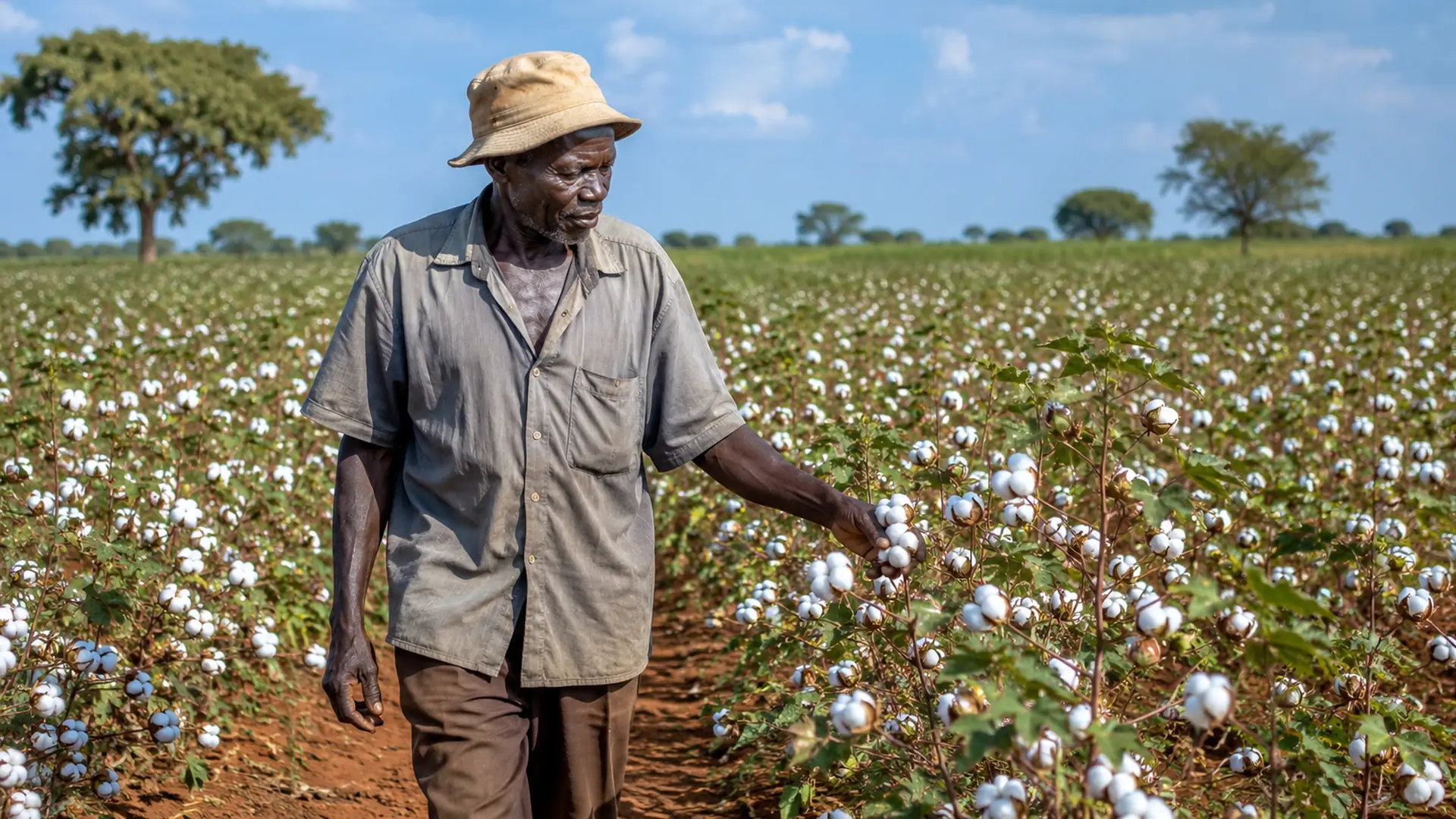
A farmer walking through a field of open white cotton bolls under a wide blue sky in northern Uganda

Home / Cotton

Hand-Picked Lint, Mill-Ready Bales

Roller-ginned cotton from Northern and Eastern Uganda — the staple length and cleanliness textile mills ask for.

Farmers hand-picking open cotton bolls from chest-high plants in a Ugandan field

01 / The Crop

Hand-Picked Since 1903

Cotton has been grown in Uganda since 1903, and it is still picked entirely by hand across the smallholder fields of the north and east — Gulu, Kitgum, Lira, and the eastern districts. Hand-picking means only open, mature bolls are taken: low trash, superior fibre, and none of the plastic contamination that haunts machine-harvested origins.

Uganda grows a single national variety — Bukalasa Pedigree Albar — so lint character is unusually consistent from lot to lot, a genuine advantage for spinners. Production has rebounded 156% since 2020 to 110,000 bales (USDA, 2024/25).

Farmers filling jute sacks with freshly picked white seed cotton at the edge of a field

02 / The Buying Station

Clean Cotton In, Clean Cotton Out

Seed cotton is collected in multiple passes through the season, carried in clean harvest sacks to buying stations, weighed, and inspected before it moves to the ginnery. What gets rejected at the field's edge never has to be removed at the mill.

For buyers who need certified organic, Ugandan supply chains certified through Control Union and ECOCERT (Fair For Life) make organic lint available on request.

Quality inspectors examining raw white cotton fibre by hand under a ginnery shelter

03 / Ginning & Classing

Roller-Ginned to Protect the Staple

Uganda's industry is built on roller ginning — the gentle method that preserves staple length — and every lot is classed by staple, grade, and micronaire before baling. Our lint runs medium-long staple, 28–30 mm, with micronaire 3.8–4.5.

Uganda's cotton standards are affiliated with international bodies including the International Cotton Association and the Bremen Cotton Exchange, so the classing on our documents is one your mill's lab will recognise.

Staff with a clipboard checking tall stacks of wrapped cotton bales inside an export warehouse

04 / Export

Baled, Wrapped, Container-Loaded

Ginned lint is pressed into ≈185 kg fully wrapped bales, moisture-checked, stencilled, and container-loaded under supervision. Around nine-tenths of Uganda's lint is exported, with physical destinations led by mills in the Far East and Europe.

Every shipment carries certificate of origin, phytosanitary clearance, and full lot traceability — FOB Mombasa, CIF on request.

From Boll to Bale

  1. 01. Hand Picking

    Multiple passes through the season, taking only open, mature bolls into clean harvest bags.

  2. 02. Roller Ginning

    Gentle roller gins separate lint from seed while preserving the fibre length spinners pay for.

  3. 03. Classing

    Every lot classed by staple, grade, and micronaire to internationally affiliated standards.

  4. 04. Bale & Export

    ≈185 kg wrapped bales, moisture-checked and container-loaded under supervision for FOB Mombasa.

Buyer Specifications

TypeHand-picked, roller-ginned Ugandan lint
VarietyBukalasa Pedigree Albar (single national variety)
Staple length28–30 mm (medium-long)
GradeGrade A lint (middling to good middling)
Micronaire3.8–4.5
OrganicCertified organic lint (Control Union / ECOCERT) on request
Bales≈185 kg, fully wrapped
Minimum order1 × 40 ft container (~52 bales) · trial volumes on request
SamplesClassing sample per lot on request
DocumentationCertificate of origin · phytosanitary · full lot traceability
IncotermsFOB Mombasa · CIF destination port on request

Request a Cotton Offer

Tell us your volume, grade, and timeline — we reply within 24 hours.

WhatsApp the Trade Desk Use the Enquiry Form

Our Other Crops